
In the construction and scaffolding industry, safety is often associated with PPE, permits, and supervision. While these are essential, they are not enough on their own. One of the most common and costly misconceptions in our industry is the belief that training only supervisors or a few key workers is sufficient.
In reality, scaffolding and construction safety only works when the entire team is trained.1. Scaffolding Is a Team Activity, Not a One Person Task
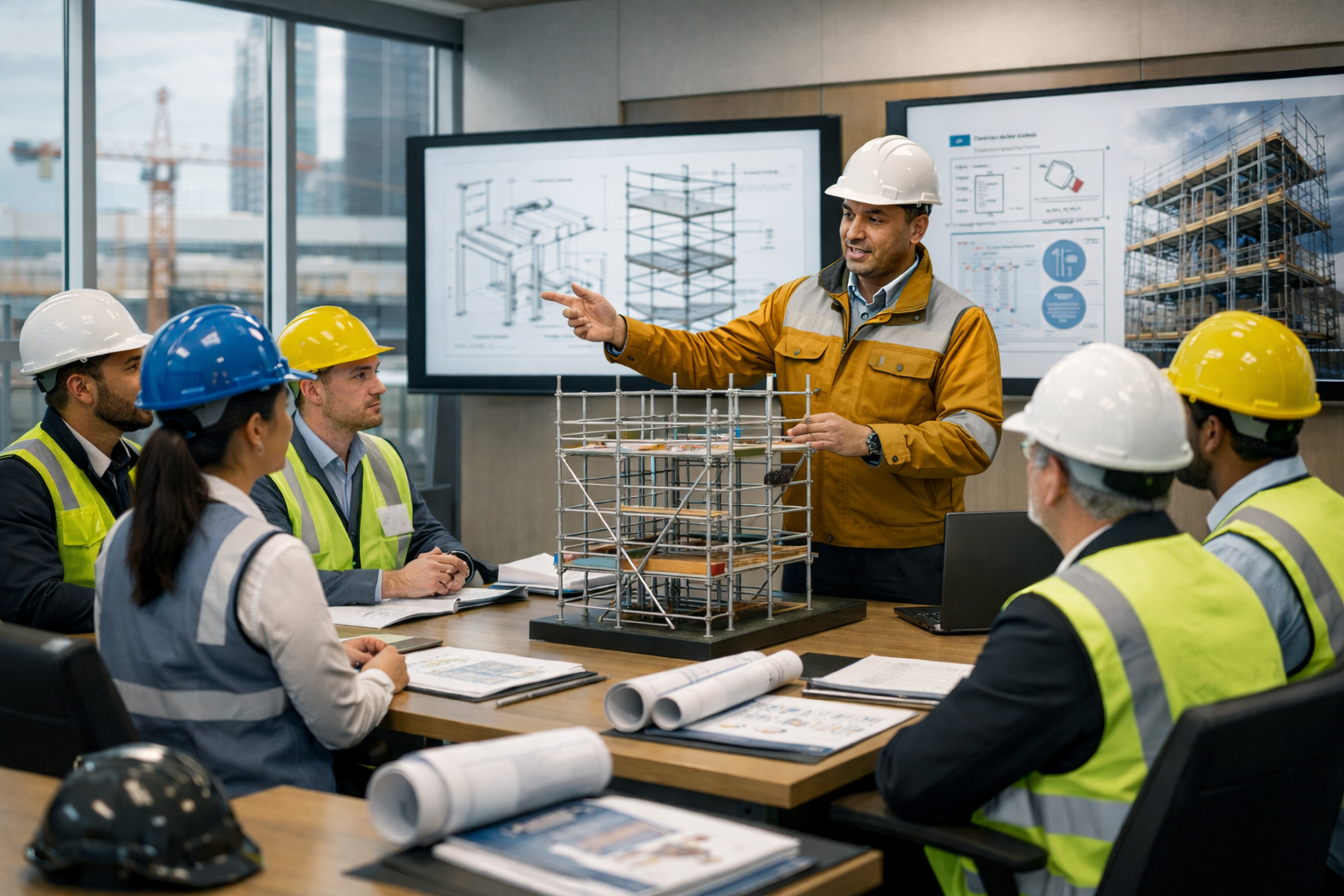
Scaffolding is erected, modified, inspected, and dismantled by teams, not individuals. Every person involved, from the lead hand to the operative, affects the safety and stability of the structure.
If only one or two people understand:
-
Load limits
-
Correct bracing
-
Safe access and egress
-
Tie patterns and sequencing
then the scaffold is only as safe as its least informed worker.
2. PPE Protects Individuals, Training Protects Everyone
Personal Protective Equipment reduces injury severity, but it does not prevent unsafe actions.
Training does.
A trained workforce:
-
Recognises hazards before they become incidents
-
Understands the consequences of shortcuts
-
Knows when to stop work and raise concerns
An untrained worker can unknowingly place others at risk, even if they are fully equipped with PPE.
3. One Trained Supervisor Cannot Watch Every Action
Supervisors play a critical role, but no supervisor can monitor every connection, every lift, and every modification at all times.
When the whole team is trained:
-
Safety becomes shared responsibility
-
Workers self-correct unsafe practices
-
Errors are identified early, not after an incident
This creates a proactive safety culture, not a reactive one.
4. Most Scaffolding Incidents Involve Human Error
Industry data consistently shows that scaffolding incidents often result from:
-
Incorrect assembly
-
Missing components
-
Unauthorized modifications
-
Lack of understanding, not lack of equipment
These are training issues, not supervision issues.
5. Training Improves Productivity and Quality
Well-trained teams:
-
Work more efficiently
-
Reduce rework and inspection failures
-
Communicate better on site
-
Deliver structurally correct scaffolds the first time
Safety and productivity are not opposites, they support each other.
6. Compliance, Reputation, and Legal Responsibility
Clients, regulators, and accreditation bodies increasingly expect evidence that:
-
All scaffolders are competent
-
Training is consistent across teams
-
Safety systems are embedded, not symbolic
Training only a few workers exposes companies to:
-
Compliance failures
-
Legal liability
-
Reputational damage
Safety isn’t just what you wear, it’s what you know. And in scaffolding and construction, everyone must be trained, not just a few.